Blog
News and Articles
Latest medical news, useful tips and glimpses from our center's life.

Article
21 Jan, 2026
WHAT ARE THE SIGNS OF KIDNEY DISEASE IN CHILDREN?
What are the symptoms of kidney disease in children?Children in the early stages of kidney disease may have few or no symptoms. As kidney disease progresses, symptoms may include:swelling of the legs, feet, arms, or face, called edema.increased or decreased urination. Some children may have to urinate frequently and may wet the bed at night.Foamy urine due to too much protein in the urine is called proteinuria.Pink or cola-colored urine caused by blood in the urine is called hematuria.Other symptoms may include:loss of appetitefatigue. feelingfeverhigh blood pressureitchy skinnausea or vomitingshortness of breathtrouble concentratingweaknessweight lossslowed growthSymptoms vary in children depending on the cause of kidney disease possible.What causes kidney disease in children?Kidney disease in children can be causedbirth defectshereditary diseasesinfectionnephrotic syndromesystemic diseasestraumaurinary blockage or reflux
Read more

Article
21 Jan, 2026
PROBLEMS AND CHALLENGES RELATED TO ARTIFICIAL INTELLIGENCE AND THE FUTURE OF AI IN ENDOSCOPIC STONE SURGERY
Challenges and Ethical ConsiderationsWhile the benefits of AI in endoscopic stone surgery are enormous, integration into clinical practice raises issues such as patient safety, cybersecurity, data transparency and interpretation, inclusion, and equity. Equally important is the quality and diversity of data sets used to train AI models, as inaccurate or incomplete data can lead to suboptimal or unfair results. Procedures for ensuring the ethical use of AI, particularly in decision-making processes, remain a pressing issue. Cost is another significant barrier, as the development and maintenance of AI systems require significant investment. Ensuring access to these technologies is critical to preventing disparities in health care delivery. In addition, there is a need to address the fear of job displacement among healthcare professionals by emphasizing the role of AI as a complementary tool rather than a replacement for the existing workforce. All of these challenges are reflected in the paucity of real AI applications in everyday practice.The Future of AI in Endoscopic Stone SurgeryThe future of AI in endoscopic stone surgery is marked by exciting possibilities. Augmented reality can become a key tool in surgical guidance, allowing real-time visualization of 3D anatomical models to enhance spatial awareness. Autonomous robotic systems could eventually perform routine surgery with minimal supervision. The use of AI can lead to better integration of surgical and anesthetic procedures, such as minimizing respiratory movements or adjusting laser precision accordingly.
Read more
Article
21 Jan, 2026
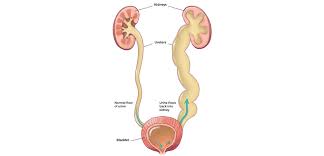
BLADDER URETERAL REFLUX
Bladder ureteral reflux (Latin name: vesicoureteral reflux or VUR for short) is a condition in which urine in the bladder flows backward, that is, toward the kidney. But in reflux, this mechanism is broken and urine can flow backwards and damage the kidneys. Causes of VUR: Congenital causes (primary VUR) - there is an anatomical defect at the junction of the urethra with the bladder. Acquired causes (secondary VUR). – occurs due to increased pressure in the bladder or chronic infections. Symptoms of VUR:Urinary tract infection (frequently recurring)Back painHeat (temperature rise)Urine bloodIncontinence or bedwetting in children Diagnosis methods:Urinalysis (to determine the presence of infection)Ultrasound examination (UZI) - shows the condition of the kidneys and urinary tractMCUG (micturition cystoureterography) - a special X-ray examination, a contrast agent is injected into the bladder to determine the degree of reflux. Treatment: In mild cases, prevent infection with antibiotics and monitor the child. Does it occur?It is more common in children, especially babies.It is more common in girls.Children with urinary tract infections should be examined for this disease.
Read more

Article
21 Jan, 2026
STONE REMOVAL PROCEDURE
Most urinary stones pass on their own.Stones that can pass:The rate of passage of a 4 mm stone is 72%, 7 mm - 47%, and 10 mm - 27%.When assessing the probability of a stone passing by itself, we take into account the following we can:1. The size of the stone (the smaller the better) 😄2. Its location (upper, middle, lower third of the ureter or at its mouth)3. Previous stone passage experience (some people have a "wide" ureter and can pass stones, others have a narrow ureter and need to have small stones surgically removed.)The size and location of the stone are mostly interchangeable, as "large" ureteral stones (>7 mm) are usually stuck in the upper parts of the ureter, small ones (4-5-6 mm) in the lower part. will remain.Waiting for the passage of the stone, i.e. carrying out conservative stone removal therapy, is possible in the following cases:1. There is a high probability that it will pass by itself. That is, stones smaller than 7 mm;2. Absence of infection, fever;3. The presence of a second working kidney;4. Absence of severe pain syndrome;Indications for surgical removal of urinary stones:1. low probability of spontaneous passage of the stone;2. repeated or unbearable pain syndrome;3. a stone in the movement path of one kidney;4. stones on both roads;5. a a few stones on the road 6. Stone not falling within 4 weeksNon-drug stone removal therapy: 1. Physical activity.2. Physiotherapy (vibration platforms) 3. Sexual life*.*The lithokinetic effect of sexual intercourse has been proven in both men and women.
Read more
Article
21 Jan, 2026
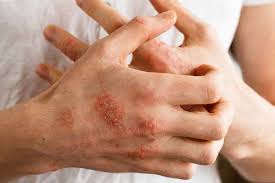
DERMATOLOGICAL PROBLEMS
There are hundreds of skin conditions that affect people. Most common skin conditions can have similar symptoms, so it's important to understand the difference between them.People should work closely with a dermatologist to diagnose and treat any skin condition to ensure it doesn't affect their lifestyle. Below are the most common skin conditions, broken down by type.Permanent conditions:A number of skin conditions last for a long time. Some may begin in childhood and continue into adulthood. In some cases, this condition is not present all the time, but worsens at certain times.Seborrheic dermatitisIn babies, this is commonly known as cradle cap. On the baby's skin, often on the scalp, oily skin spots are formed. It is harmless and usually goes away on its own.In adults, seborrheic dermatitis can appear anywhere and tends to go away throughout a person's life. Affected skin may be red, swollen, and oily. A white-yellow crust may also appear on the surface of the skin. Many treatments can help relieve symptoms.Cells should be checked.MelanomaAbnormal moles can lead to melanoma, a serious and life-threatening skin cancer.If moles have asymmetrical shapes, jagged edges, uneven color, or changes in size, they should be checked.Patients with melanoma may undergo surgery or receive chemotherapy or radiation treatment. possible.Cutaneous tuberculosisCutaneous tuberculosis is a complex disease transmitted from person to person. The disease attacks the immune system, causing inflammation and pain.Although skin tuberculosis can affect any part of the body, skin symptoms include red spots or rings on the skin, a rash that looks like a sunburn on the nose and cheeks, or a round rash that doesn't itch or hurt. They may be accompanied by other symptoms such as headache, fever, fatigue, and swollen, stiff, or painful joints.Treatment includes a variety of powerful medications to help reduce the damage caused by skin tuberculosis.
Read more

Article
21 Jan, 2026
MOST COMMON NEUROLOGICAL DISEASES
There are many disorders of the nervous system that require clinical care from a doctor or other health care professional. We will discuss some of them below.What is a stroke?A stroke or brain attack occurs when blood flow to your brain stops. This is an emergency.The brain needs a constant supply of oxygen and nutrients to function well. If the blood supply is interrupted even for a short time, it can cause problems. Brain cells begin to die after a few minutes without blood or oxygen.When brain cells die, brain function is lost. You may not be able to do things controlled by this part of the brain. For example, a stroke can affect your ability to:MoveSpeakEatThink rememberControl your bowels and bladderControl your emotionsControl other vital body functions.Strokes can happen to anyone at any time.What Causes a Stroke? A stroke occurs when blood flow to the brain is interrupted or impaired.Alzheimer's diseaseAlzheimer's disease is the most common form of dementia, affecting 5.2 million Americans over age 65, as well as hundreds of thousands of people under age 65 with early-onset Alzheimer's.Nearly two-thirds of Americans with Alzheimer's disease are women. Alzheimer's disease is diagnosed by ruling out other diseases with similar symptoms, which allows the diagnosis to be made with up to 95 percent accuracy.Unlike other forms of dementia, Alzheimer's does not affect patients' motor function until the late stages of the disease.EpilepsyEpilepsy is a neurological condition involving the brain that causes people to have repeated makes you more prone to seizures. It is one of the most common diseases of the nervous system and affects people of all ages, races and ethnicities. Nearly 2.2 million Americans live with epilepsy.Anything that disrupts the normal connections between nerve cells in the brain can cause seizures. This includes high fever, low blood sugar, high blood sugar, alcohol or drug use, or concussion. Anyone with this condition can have one or more seizures. However, when a person has two or more seizures, he is considered to have epilepsy. Epilepsy can have many causes, including imbalances in nerve-signaling chemicals called neurotransmitters, tumors, strokes, brain damage from disease or injury, or some combination of these. In most cases, no cause can be found for epilepsy.
Read more

Article
21 Jan, 2026
MALE UROLOGY PROBLEMS
Delicate care for men's urology problemsNEW AGE UROLOGY MEDICAL CENTER specialists competently treat a number of diseases affecting the kidneys, urinary tract, bladder and male genitalia. Our specialist urologists treat male urology problems including:Benign (non-cancerous) lesionsBenign prostate diseases such as prostatitis and enlarged prostate (benign prostatic hyperplasia or BPH)Erectile dysfunctionPeyronie's disease (penile curvature)Urinary disorders disordersInfertilityKidney stonesSexually transmitted diseasesUrinary tract infectionsPenis injuriesBirth control, including vasectomyDiagnosis of male urological problemsOur urologists first perform a complete physical examination conduct and interview men about their medical and family history. Diagnostic tests for male urology problems may include:Imaging studies such as ultrasoundLaboratory tests (pathology)Tissue sample (biopsy)Treatment for male urology problemsSome male urology problems may resolve on their own, but others require treatment. NEW AGE UROLOGY MEDICAL CENTER offers a range of advanced treatment methods for the complete treatment of male urological problems. These treatments include:Oral medications such as antibiotics, anti-inflammatories, and symptom relieversInjectables such as interferon and collagenase, used to reduce scar tissue and inflammation in conditions such as Peyronie's diseaseMinimally invasive surgical proceduresLasers used to treat kidney stones, ureteral stones, and some prostate disorders therapyMale InfertilityAt NEW AGE UROLOGY MEDICAL CENTER, we are dedicated to providing comprehensive care in the diagnosis and treatment of men with fertility problems. We work collaboratively with reproductive endocrinologists (women's fertility specialists) to improve a couple's overall fertility care.Common male urology treatments:Testicular sperm extractionVaricocele repairFertility preservation in cancerMedical management of low sperm count, low sperm motility, and low sperm morphology management
Read more